Finger Knitting - A Simple Way To Start Knitting Without Needles

Finger knitting is a technique that allows you to knit using only your hands — no needles required.
Using just your fingers and a length of yarn, you can create cords, scarves, accessories, and even simple blankets. Because it requires minimal equipment and can be learned quickly, it’s often one of the easiest ways to begin exploring fibre crafts.
In this post, we’ll look at:
Why finger knitting works so well for beginners
The best yarns to use
What you can realistically make with it
Why Finger Knitting Is So Accessible
Finger knitting removes many of the barriers that can make traditional knitting feel intimidating.
There are no needles to manage and no complicated set-up. You simply form loops around your fingers and build the length as you go.
Because of this, it works well for:
Children learning coordination
Beginners who feel frustrated by tension control
Quick, portable projects
Relaxed crafting at home or on the move
It’s straightforward, portable, and surprisingly versatile.
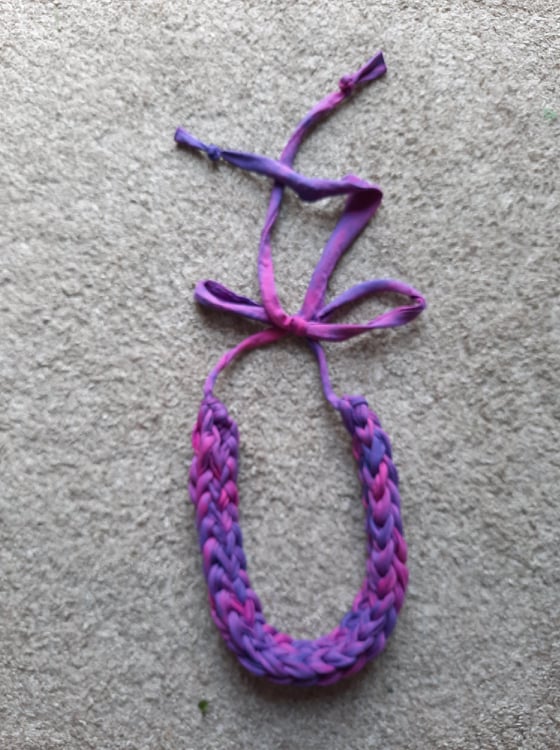
No Needles, No Hooks — Just Yarn
Unlike other no-needles techniques that may require tools to finish off your work, finger knitting can often be completed without any additional equipment.
When working with chunky yarns, the tail can simply be tucked into the stitches to secure the piece.
It’s about as minimal as crafting gets.
Choosing the right yarn
The yarn you use makes a big difference in how enjoyable the process feels.
Thickness
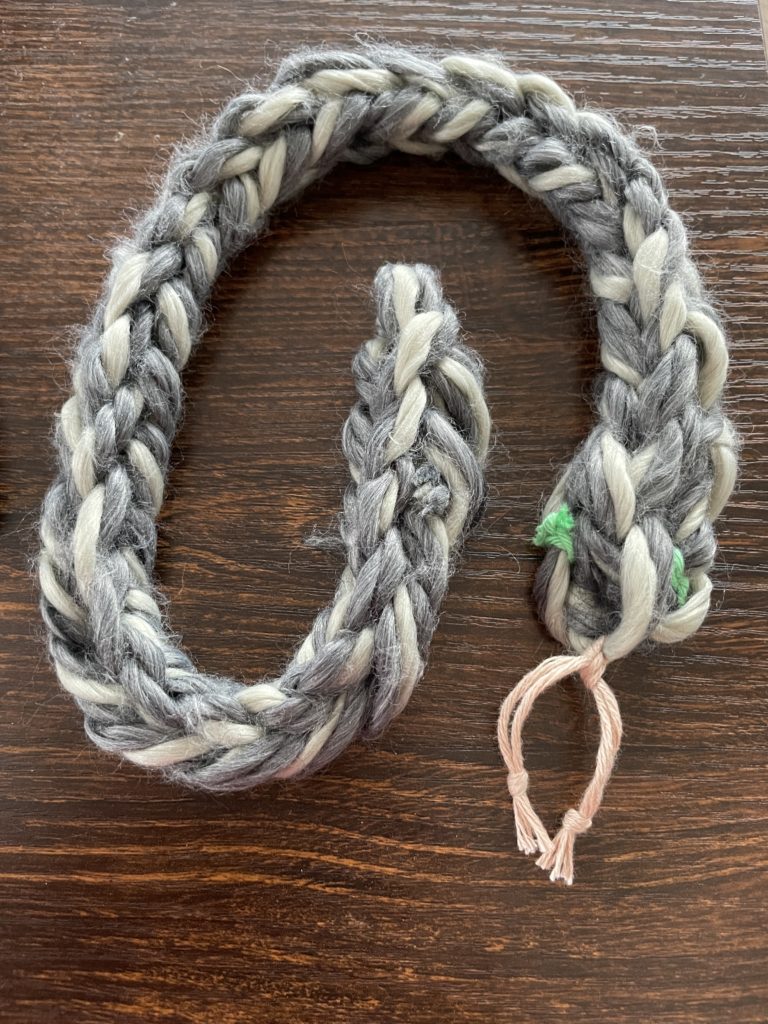
Chunky or super chunky yarn is easiest for beginners. Thicker yarn makes the loops easier to see and manage.
T-shirt yarn works particularly well because it’s structured and durable.
Texture
Smooth yarn helps you clearly see your stitches. Highly textured yarn can look interesting but may be harder to control when learning.
Fibre Content
Natural fibres tend to be breathable and comfortable to wear. Synthetic yarns can be more budget-friendly and easier to wash.
For beginners, focus on thickness first — fibre can come later.
Colour
Choose colours that help you see what you’re doing. Very dark yarn can make learning harder.
What Can You Make?
Finger knitting is especially suited to:
Skinny scarves
Belts
Necklaces and bracelets
Decorative cords
Simple soft toys
Because it creates cord quickly, it’s ideal for smaller wearable or decorative items.
Final Thoughts
Finger knitting is one of the simplest entry points into the world of yarn crafts.
It builds confidence, develops coordination, and helps you understand how knitting structure works — without the frustration some people experience with needles.
If you’d like to see the process step by step, my finger knitted snake tutorial is available on YouTube.